Drywall Repair in Toronto
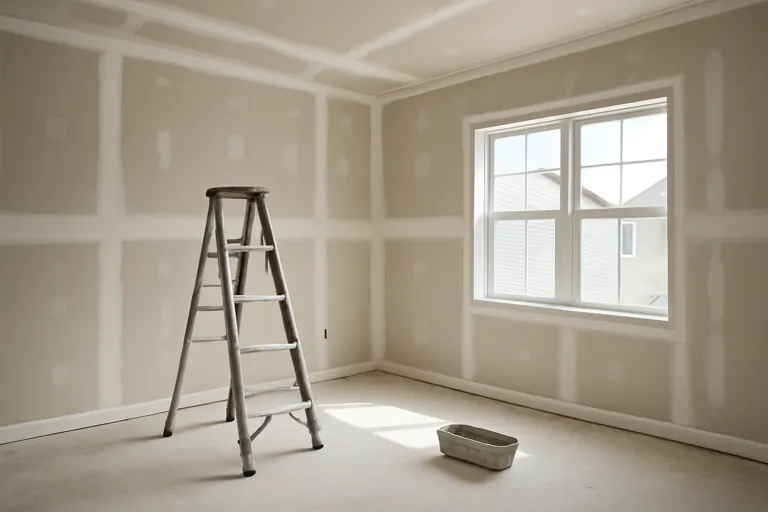
Most of the walls in Toronto's older neighbourhoods aren't drywall at all — they're plaster over wood lath, and patching them like drywall is how you get a repair that cracks back within a season. The true drywall lives in the condo towers, the post-war houses and the renovated interiors of century homes.
We match the repair to the wall: setting-type compound and a bonding agent over lath, mesh and feathered coats on real drywall, and texture blending so the patch disappears. Photos of the damage and a rough size get you a free quote.
Drywall Repair in Toronto: what to expect
The common Toronto repairs follow patterns. In Riverdale and the Annex, hairline cracks radiate from door and window corners as hundred-year-old foundations keep settling — those need the crack raked out and reinforced, not just filled. In newer condos, the usual damage is anchor holes and dings in half-inch drywall over steel studs, plus popped corner bead from moving furniture through tight suites. Move-out patch lists for landlords and condo sellers make up a big share of the work.
About Toronto homes
Toronto's housing runs the full range: Victorian and Edwardian semis in Cabbagetown, Riverdale and Trinity Bellwoods, century rowhouses downtown, post-war strips further out, and tens of thousands of condo units in towers from CityPlace to Yonge and Eglinton. In the older neighbourhoods you're dealing with plaster-and-lath walls, settled foundations, doors that no longer square up, and original double-hung windows that need weatherstripping rather than replacement. In the towers, the jobs are smaller but the logistics matter — booking the elevator, working within condo-board rules for in-suite work, and knowing which walls you can actually anchor into.
More on the local housing stock: handyman services in Toronto.
What affects the cost of drywall repair in Toronto
Rather than a made-up number, here's an honest look at what affects the cost of drywall repair in Toronto:
- The era of the home — Toronto has a wide mix, and a 1960s build and a recent build can need quite different work for the same job.
- Number of locations — ten small spots across three rooms takes longer than one big patch, because each spot needs its own coats and drying time
- Texture on the wall or ceiling — stipple and knockdown finishes have to be recreated to hide the patch, which adds a step
- The cause of the damage — if a crack keeps returning or the board is soft from moisture, the underlying movement or leak has to be dealt with first
- Paint matching — if you have the original paint we can finish the job in one go; if not, walls may need corner-to-corner repainting to hide sheen differences
- Access and height — stairwell walls and double-height entries need ladders or planks, which adds setup time
For the full breakdown of what the job involves, see drywall repair in Toronto and the GTA, or read how handyman pricing works in the GTA — then request a free Toronto quote for your actual job (how quoting works).
Drywall Repair in Toronto: common questions
My Toronto semi has plaster walls — do you patch plaster or replace it with drywall?
Will the patch be invisible?
Why does the same crack keep coming back after I fill it?
Get your Toronto quote
Tell us what your home needs — a small fix or a full project — and get a free quote.