Caulking & Sealing in Pickering
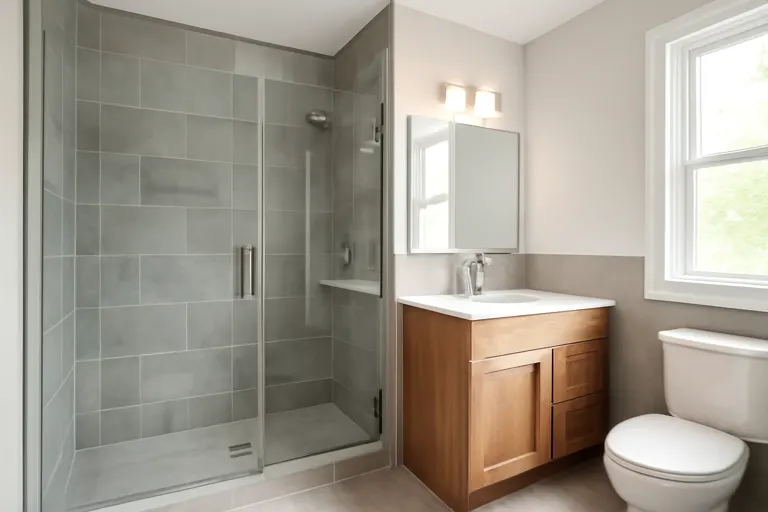
The tubs in Bay Ridges have been recaulked so many times since the 1960s that we routinely find four or five layers of old silicone under the current bead — and new caulk over old caulk is why it keeps failing within a year. The only fix that lasts is stripping every layer back to clean tile and tub, treating any mould behind it, drying the joint and running a fresh mould-resistant bead.
That prep-first approach is the whole job, in any Pickering bathroom. We cut out the old material, clean with the right solvents, mask for straight lines and tool the bead properly. Send a photo of the worst joint — tub, shower, kitchen counter or exterior — and you will have a free quote the same day.
Caulking & Sealing in Pickering: what to expect
Seaton's new homes have their own caulking season: as the structure dries and settles in the first couple of years, gaps open where tub surrounds meet drywall and where baseboards meet floors, and exterior joints shrink back from siding and trim. Sealing those once the settling slows is normal new-home maintenance, not a defect panic. In lakefront homes across West Shore and Rosebank, we also renew exterior caulking on the weather side — wind-driven rain off Lake Ontario finds every failed joint on a west or south face.
About Pickering homes
Pickering stretches from 1960s lakefront suburbs to brand-new city being built on farmland. Bay Ridges, laid out around the GO station in the 1960s, was one of the area's first commuter communities, joined by West Shore and Rosebank near the lake, then Liverpool, Amberlea and Highbush through the 70s–90s. The City Centre has grown a cluster of condo towers around the Pickering Town Centre, and in the north, the massive Seaton development is adding whole neighbourhoods, while hamlets like Claremont, Greenwood and Whitevale keep genuine century homes on quiet streets.
More on the local housing stock: handyman services in Pickering.
What affects the cost of caulking & sealing in Pickering
Rather than a made-up number, here's an honest look at what affects the cost of caulking & sealing in Pickering:
- Condition of the old bead — layers of caulk-over-caulk take much longer to strip than a single failed bead
- Mould behind the joint — staining that has migrated behind silicone needs treatment before resealing, not just a new bead over it
- Joint width — gaps wider than about a centimetre need backer rod first, which adds a step
- Number of wet areas — one tub surround versus tub, shower stall, and two sinks changes the visit length
- The era of the home — Pickering has a wide mix, and a 1960s build and a recent build can need quite different work for the same job.
- Surface material — natural stone needs a non-staining neutral-cure silicone, not the standard hardware-store tube
For the full breakdown of what the job involves, see caulking & sealing in Toronto and the GTA, or read how handyman pricing works in the GTA — then request a free Pickering quote for your actual job (how quoting works).
Caulking & Sealing in Pickering: common questions
Why does the caulk in our Bay Ridges tub go black again months after recaulking?
Why does my caulk keep going mouldy?
Can you just caulk over the old bead to save time?
Get your Pickering quote
Tell us what your home needs — a small fix or a full project — and get a free quote.