Caulking & Sealing in Milton
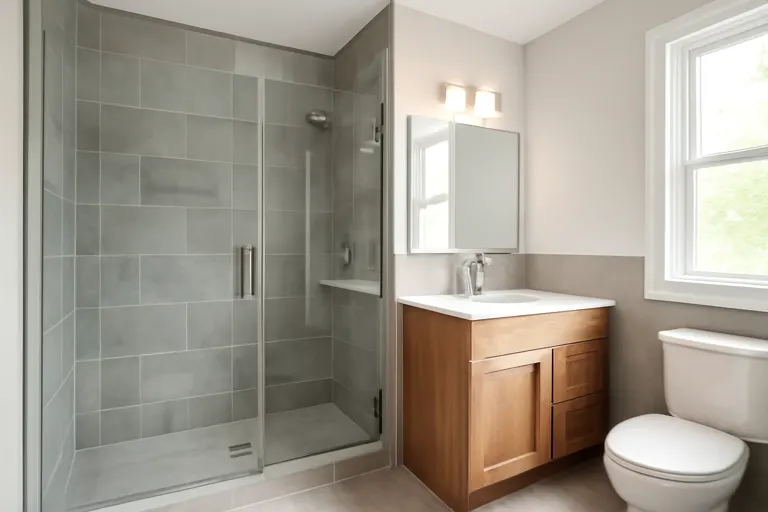
If the caulking in your ensuite went in when the house was built, it owes you nothing by now — and across Milton's boom subdivisions, most of it did. Builder crews caulked thousands of tubs and showers in Beaty, Scott and Hawthorne Village in single passes during the 2000s, and that first-generation bead is now cracked, shrunken or spotted with mould that no cleaner reaches.
A proper recaulk is removal first: strip the old bead completely, treat any mould at the joint, dry it, then run fresh mould-resistant silicone with clean tooling. Caulk over old caulk fails in months, which is why so many quick fixes here need redoing. Photos of the joints get a free quote — bundling the bathrooms plus the kitchen makes the visit worthwhile.
Caulking & Sealing in Milton: what to expect
The stakes are higher in Milton's stock than the job's size suggests: boom-era ensuites mostly have acrylic or fibreglass surrounds sitting on framed walls, and once water tracks behind a failed corner bead it finds subfloor and drywall you can't see. Tubs against exterior walls in the 2000s builds also move slightly with the seasons, so the tub-to-tile joint needs a flexible bead sized for movement, not a hard skim of whatever was on the shelf.
About Milton homes
Milton spent most of the 2000s and 2010s as the fastest-growing community in the country, which means the housing stock is overwhelmingly young — but not new anymore. The big survey neighbourhoods that came with the growth boom — Hawthorne Village, Dempsey, Clarke, Beaty, Scott, Ford and Cobban — are now anywhere from five to twenty years old, well past warranty and into first-real-maintenance territory. Old Milton around Main Street is the exception, with Victorian-era homes and mature streets, and out toward Campbellville and Brookville you're into rural escarpment properties.
More on the local housing stock: handyman services in Milton.
What affects the cost of caulking & sealing in Milton
What you'll pay for caulking & sealing in Milton depends on a few real things:
- Condition of the old bead — layers of caulk-over-caulk take much longer to strip than a single failed bead
- Mould behind the joint — staining that has migrated behind silicone needs treatment before resealing, not just a new bead over it
- Joint width — gaps wider than about a centimetre need backer rod first, which adds a step
- Parking, access and any condo or townhouse rules at your Milton address, which affect how the crew works.
- Movement in the joint — a tub that flexes when you stand in it needs a flexible sealant and sometimes support work first
- Surface material — natural stone needs a non-staining neutral-cure silicone, not the standard hardware-store tube
For the full breakdown of what the job involves, see caulking & sealing in Toronto and the GTA, or read how handyman pricing works in the GTA — then request a free Milton quote for your actual job (how quoting works).
Caulking & Sealing in Milton: common questions
The caulking in my Scott ensuite keeps going black no matter how much I scrub — is replacing it worth it?
Is caulking the same as grout, and which do I need?
How often should tub surround sealing be redone?
Get your Milton quote
Tell us what your home needs — a small fix or a full project — and get a free quote.