Drywall Repair in Burlington
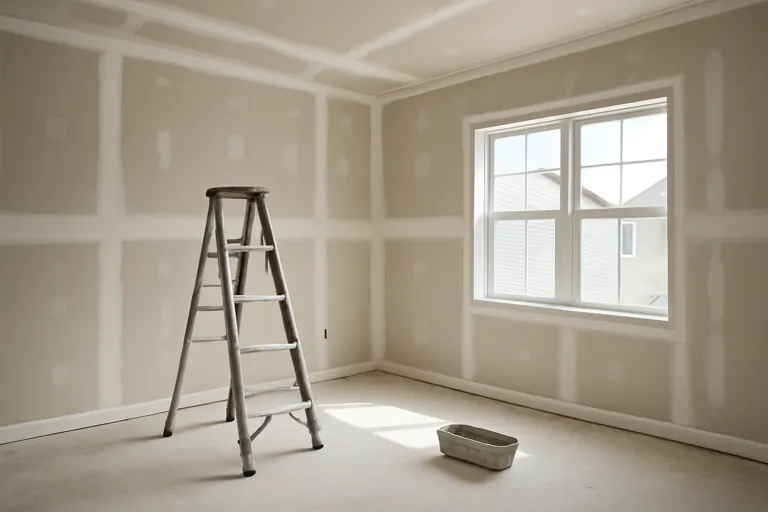
Not every damaged wall in Burlington is drywall. South of New Street, through Roseland and into old Aldershot, plenty of houses still carry plaster — sometimes over wood lath, sometimes over early gypsum board — and patching it like drywall leaves a bulge or a crack line that comes back. Newer areas are gypsum all the way: Headon Forest and Millcroft walls carry thirty years of anchor holes, and Alton Village homes get the classic settling cracks above doorways and nail pops as the framing dries.
We match the repair to the wall: setting-type compound and bonding agents on plaster, mesh or California patches for drywall hole repair, and texture-matching where a previous fix left a mess. Send a photo with something for scale and we'll quote the wall patching, primed and ready for paint.
Drywall Repair in Burlington: what to expect
One recurring Burlington pattern: mid-century homes that had basements finished in the 1970s or 80s often have thin panelling or early drywall down there, and moisture around the foundation shows up as soft, papery patches near the floor. Patching that without asking why it got wet is wasted work, so we flag the moisture source — grading, eavestroughs, a slow leak — as part of the repair.
About Burlington homes
Burlington built out from the lake northward, and its repair needs follow that map. Aldershot and the streets south of New Street carry post-war bungalows and 1960s side-splits, Roseland has genuine character homes under mature trees, and downtown has densified with condo towers along Lakeshore Road and Brant Street. Head up the hill and you move through the 70s and 80s stock of Brant Hills and Headon Forest, the 90s golf-course homes of Millcroft, and finally Alton Village, the city's last big greenfield build in the 2000s before the escarpment boundary stopped outward growth.
More on the local housing stock: handyman services in Burlington.
What affects the cost of drywall repair in Burlington
A drywall repair quote in Burlington comes down to the specifics of your job. The main things that move it:
- Size and depth of the damage — a screw hole is filled in minutes; a fist-sized hole needs backing, tape and multiple coats over two visits
- Number of locations — ten small spots across three rooms takes longer than one big patch, because each spot needs its own coats and drying time
- Texture on the wall or ceiling — stipple and knockdown finishes have to be recreated to hide the patch, which adds a step
- The cause of the damage — if a crack keeps returning or the board is soft from moisture, the underlying movement or leak has to be dealt with first
- Paint matching — if you have the original paint we can finish the job in one go; if not, walls may need corner-to-corner repainting to hide sheen differences
- Parking, access and any condo or townhouse rules at your Burlington address, which affect how the crew works.
For the full breakdown of what the job involves, see drywall repair in Toronto and the GTA, or read how handyman pricing works in the GTA — then request a free Burlington quote for your actual job (how quoting works).
Drywall Repair in Burlington: common questions
Our Roseland house has a long ceiling crack that keeps returning — can you fix it for good?
Will the patch be invisible?
Why does the same crack keep coming back after I fill it?
Get your Burlington quote
Tell us what your home needs — a small fix or a full project — and get a free quote.